Scientific Plant Service uses soil testing and nutrient management to make sure your turf gets what it needs, in the right amounts, without guesswork or waste.
Call: 240-742-3762


Scientific Plant Service
Scientific Plant Service uses soil testing and nutrient management to make sure your turf gets what it needs, in the right amounts, without guesswork or waste.
It’s never been easier to have a beautiful lawn. Call today to lock in your savings and get two FREE applications. But time is running out!
Opt into our text messaging platform to begin your program and schedule with us today!
Healthy lawns start with healthy soil. Fertilizer, lime, and other products only work well if they are matched to what is already in the ground.
Our entire service area lies within the Chesapeake Bay watershed, so careful nutrient use is not only good for your lawn, it is also important for the environment.
Step
1
Soil sample collection
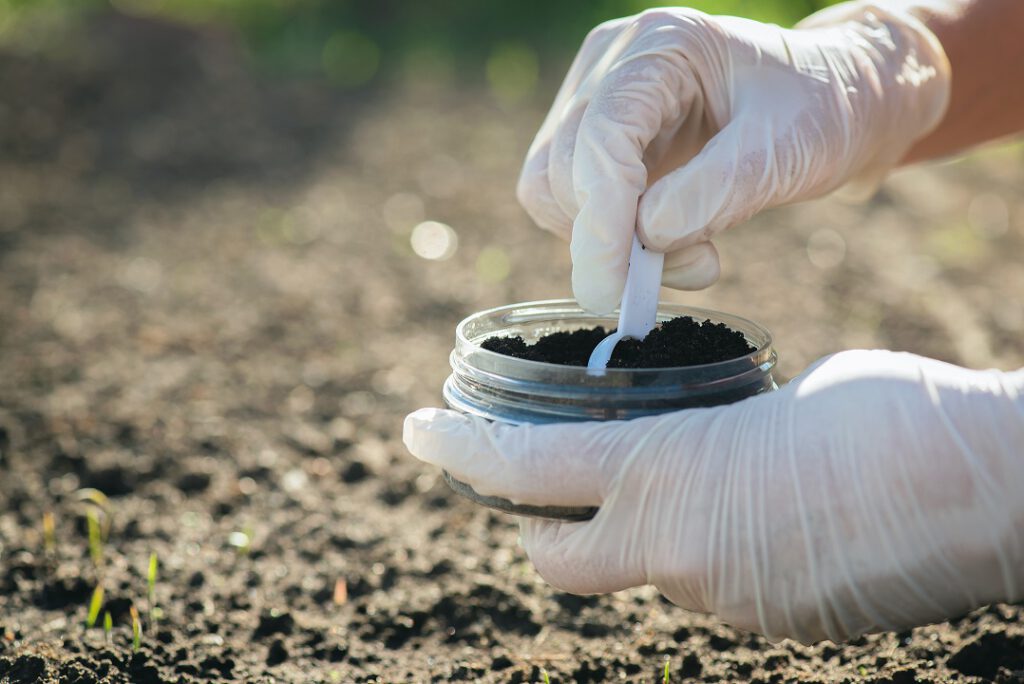
We extract soil cores from multiple spots across your lawn to create a representative sample. These are sealed in special containers to protect the integrity of the sample.
Step
2
Independent laboratory analysis
Samples are sent to an independent, accredited lab for detailed testing. The lab evaluates pH, phosphorus, potassium, and other important indicators of soil fertility.
Step
3
Clear recommendations
When test results show the need for adjustments in phosphorus, potassium, or pH, we provide specific recommendations to correct those deficiencies. That may include lime, targeted fertilizer blends, or other amendments.
Step
4
Program adjustments over time
As your soil improves, we can adjust your lawn care program so it continues to match current conditions instead of over-treating the lawn.
Because all of our properties drain toward the Chesapeake Bay, nutrient management is a key responsibility. Excess fertilizer that is not used by turf can move off site through runoff or leaching.
This is good for your turf, good for the Bay, and good for your budget.
 Follows Maryland nutrient management requirements.
Uses soil test results to avoid unnecessary fertilizer applications.
Focuses on applying the right product at the right rate and the right time.
Helps your lawn thrive while minimizing the risk of nutrient runoff.
Follows Maryland nutrient management requirements.
Uses soil test results to avoid unnecessary fertilizer applications.
Focuses on applying the right product at the right rate and the right time.
Helps your lawn thrive while minimizing the risk of nutrient runoff.Once we know what your soil needs, we can select or design fertilizer blends that match those needs.
Controlled-release technology lets us apply less nitrogen than many traditional programs while still delivering excellent color and growth.
 POLYON controlled-release fertilizer, which feeds slowly over time rather than all at once.
Custom formulations based on your soil test results and turf requirements.
Application rates that are calculated to provide enough nutrition without excessive leftovers in the soil.
POLYON controlled-release fertilizer, which feeds slowly over time rather than all at once.
Custom formulations based on your soil test results and turf requirements.
Application rates that are calculated to provide enough nutrition without excessive leftovers in the soil.
When you build your lawn care program on solid soil information.
It is one of the most cost-effective steps you can take to support long-term lawn health.
Healthier turf with better color, density, and root growth.
More efficient fertilizer use, with fewer wasted applications.
Improved diagnosis of lawn problems related to pH or nutrient imbalance.
Environmental protection by keeping nutrients where they belong in the lawn, not in local waterways.
Clear guidance instead of trial and error with store-bought products.
If you are tired of guessing about fertilizer or not getting the results you expect from your lawn, it may be time for a soil test. Call Scientific Plant Service or request a Nutrient Management & Soil Testing evaluation. We will sample your lawn, review the lab results with you, and build a plan that feeds your turf based on real numbers, not guesswork.