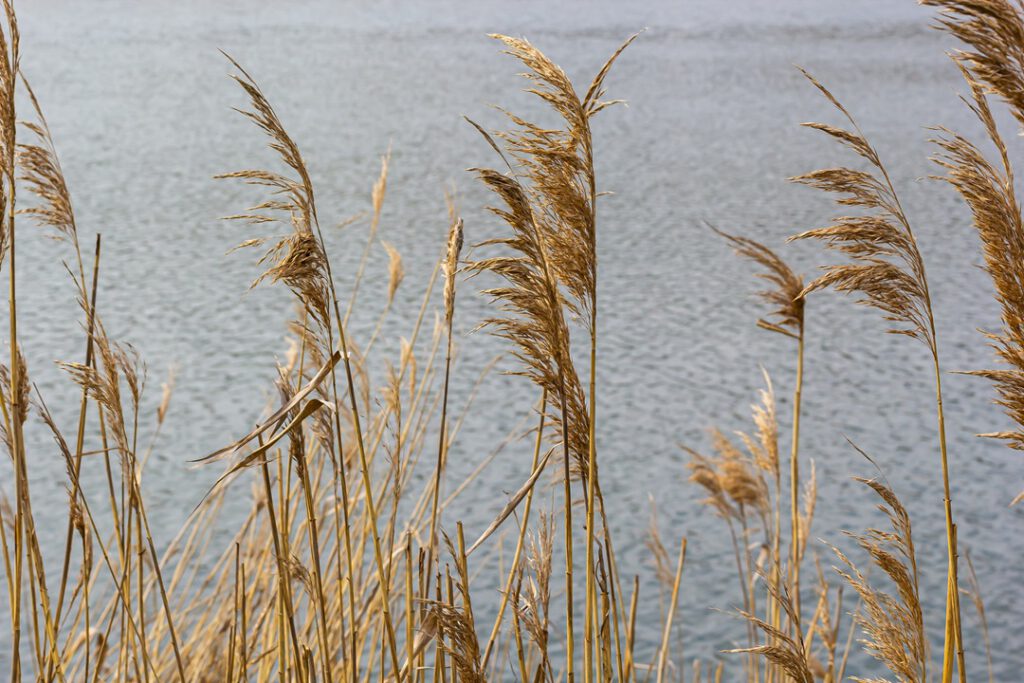
Scientific Plant Service offers professional phragmites control that targets the entire plant, including its deep, spreading root system, so your shoreline and aquatic areas can support a healthier mix of native plants.
Services
Scientific Plant Service offers professional phragmites control that targets the entire plant, including its deep, spreading root system, so your shoreline and aquatic areas can support a healthier mix of native plants.
It’s never been easier to have a beautiful lawn. Call today to lock in your savings and get two FREE applications. But time is running out!
Monday - Friday: 8:30am to 5:30pm EST
Saturday: 9:00am to 2:00pm EST
Opt into our text messaging platform to begin your program and schedule with us today!
Phragmites, also known as common reed, is a tall, wispy grass that can reach 10 to 12 feet in height. It thrives along shorelines, pond banks, ditches, and other damp areas. While it can look attractive from a distance, it is an aggressive, non native invasive plant that quickly takes over wetlands and pond edges.
Once phragmites becomes established, it does not stay in a small patch for long. It spreads both by seed and by a dense network of underground stems, or rhizomes.
What begins as a few stalks along the bank can quickly become a solid wall of reed if it is not actively managed.
Our phragmites control programs are built around careful timing, correct product selection, and responsible application practices. A typical program includes:
Step
1
Site Evaluation
We walk the shoreline, pond edge, or wet area to map out the phragmites stand, note plant height and density, and review access and nearby desirable vegetation.
Step
2
Treatment Plan
We design a control plan that fits the site. This includes choosing appropriate herbicide products, deciding on application methods, and scheduling work inside the effective fall window.
Step
3
Targeted Herbicide Application
Our licensed applicators treat the phragmites stand so that the herbicide reaches the leaves and can move down into the root system. Applications are made with care to minimize impact on nearby desirable plants and water.
Step
4
Follow Up And Re Evaluation
Because of the strength of the rhizome system, more than one season of treatment may be needed, especially on older, dense stands. We monitor the response and recommend follow up treatments where necessary.
Working with a qualified aquatics team saves time and protects the rest of your site.
Because phragmites often grows in or near regulated water, using the right methods and staying within environmental requirements is essential.
Restore a more natural mix of shoreline and wetland plants.
Improve access and visibility around ponds and waterways.
Reduce long term maintenance headaches from unmanaged stands.
Support healthier habitat for fish, birds, and other wildlife.
Prevent small patches from turning into large, expensive problems.
If tall reed stands are taking over your pond banks, ditches, or wetland edges, call Scientific Plant Service or request an aquatics evaluation. We will assess the phragmites on your site, explain your options, and design a control program that fits your water body and long term goals.